


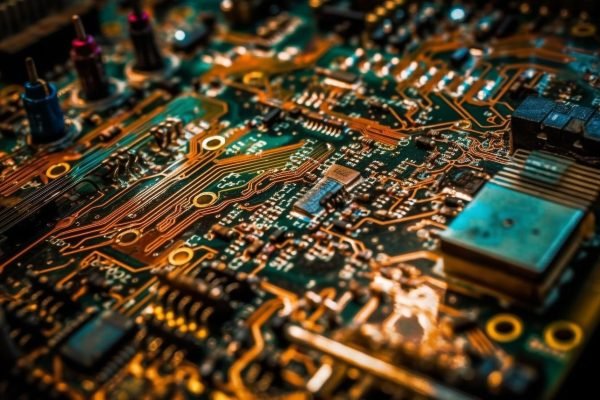
Multi-layer PCB
A multilayer circuit board has at least three conductive layers, including outer layers and inner layers. Usually made of copper foil, these layers serve as transmission paths for electrical signals.

Special PCB
Special circuit boards mainly include high - temperature and high - frequency circuit boards, embedded component circuit boards, high - voltage circuit boards, and ceramic circuit boards
HDI PCB
HDI (High - Density Interconnect) board is a special printed circuit board that uses fine interconnection technologies such as micro - blind vias and buried vias to achieve higher circuit density and smaller component layout space. Essentially,
Rigid Flex PCB
Flex - Rigid PCB is a composite printed circuit board that integrates a Rigid PCB and a Flexible PCB into one through special processes. Now, say in English what advantages Flex - Rigid PCBs have.
IC Substrate PCB
IC Substrate PCB, that is, Integrated Circuit Substrate Printed Circuit Board, is a special type of printed circuit board designed specifically to support and interconnect integrated circuits (ICs)
High frequency PCB
High frequency PCB is a special circuit board designed specifically for the transmission of high - frequency signals (usually referring to signals with a frequency ≥ 300MHz or a signal transmission rate ≥ 1Gbps).
Metal PCB
Metal Core PCB (MCPCB for short) is a special printed circuit board with a metal material (such as aluminum, copper, iron alloy) as the core substrate. The key difference from the traditional FR - 4 substrate (fiberglass epoxy substrate) is that the metal base material replaces the insulating base material
Heavy Copper PCB
Heavy Copper PCB is a special printed circuit board with a copper foil thickness much higher than that of conventional PCBs. Its core definition is that the copper foil thickness of the circuit layer is ≥70μm (the copper foil thickness of conventional PCBs is mostly 12 - 35μm). In some high - power scenarios, the copper foil thickness can even reach over 1000μm (1mm)


