



Introduction to PCB Board Materials
**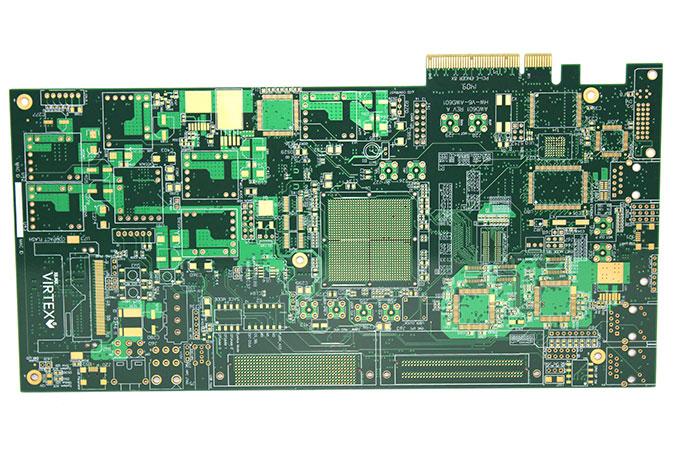
Printed Circuit Boards (PCBs), known as the "skeleton and nerves" of electronic products, serve as the core carrier for holding electronic components and realizing electrical interconnection. As the basic raw material of PCBs, PCB board materials directly determine the electrical stability, mechanical strength, environmental adaptability, and service life of PCBs. With the rapid development of the electronics industry, PCB materials have evolved from a single insulating support material to a professional material system adapted to various scenarios (such as high-frequency communication, extreme temperatures, and high-power heat dissipation). The following provides a comprehensive introduction to mainstream PCB materials from the perspectives of material characteristics, manufacturing processes, application scenarios, and selection logic.
I. Epoxy Glass Cloth Substrates: The "Universal Workhorse" in the Industrial Field
Epoxy glass cloth substrates use epoxy resin as a binder and glass fiber cloth as a reinforcing material. They are currently the most widely used category of PCB substrates, covering subdivided types such as FR-4 and FR-5. Among them, FR-4 accounts for more than 70% of the global PCB substrate consumption.
1. FR-4 Substrate: The King of Cost-Effectiveness
FR-4, fully known as "Flame Retardant Type 4", complies with the UL94 V-0 flame retardant standard. Its core structure is "glass fiber cloth + epoxy resin + copper foil", and copper-clad laminates are made through a hot-pressing forming process. From the performance perspective, FR-4 has three core advantages:
- Balanced Electrical Performance: The dielectric constant (Dk) ranges from 4.2 to 4.7 (at 1GHz), and the dielectric loss tangent (Df) is ≤0.02, which can meet the transmission requirements of medium and low-frequency signals (≤1GHz). The insulation resistance is ≥10¹⁴Ω, and the breakdown voltage is ≥18kV/mm, which can effectively prevent circuit short circuits or leakage.
- Reliable Mechanical Strength: The flexural strength (longitudinal ≥450MPa, transverse ≥400MPa) and tensile strength ≥100MPa can withstand mechanical stress during the welding of electronic components and equipment assembly without deformation or fracture.
- Controllable Cost: Raw materials (glass fiber, epoxy resin) are easily available, the production process is mature, and the unit price is approximately 80-150 yuan/m², making it suitable for mass production.
According to the glass transition temperature (Tg), FR-4 can be divided into two categories: ordinary Tg (130-150℃) and high Tg (170-200℃). The ordinary Tg version is often used in consumer electronics (such as TV motherboards and router circuit boards), while the high Tg version is suitable for high-temperature environments such as automotive electronics (such as in-vehicle navigation motherboards) and industrial control (such as frequency converter circuit boards), and can work short-term at temperatures above 150℃ without performance degradation. In addition, FR-4 can also be modified to optimize performance. For example, adding ceramic powder to improve thermal conductivity (increasing the thermal conductivity from 0.2W/m·K to 1.0W/m·K) to adapt to medium and low-power heat dissipation scenarios (such as LED driver power supplies). (A physical image of FR-4 substrate copper-clad laminate and a disassembled image of its application in a computer motherboard can be inserted here)
2. FR-5 Substrate: High-Temperature Resistant Upgraded Version
FR-5 is a high-temperature resistant version of FR-4, using modified epoxy resin (such as bisphenol F-type epoxy resin). Its Tg temperature can reach above 200℃, the upper limit of long-term service temperature is 30-50℃ higher than that of FR-4, and its dimensional stability at high temperatures is better (the coefficient of thermal expansion (CTE) is reduced by 15%-20%). It is mainly used in scenarios with strict requirements for high-temperature resistance, such as military electronics (such as radar control modules) and aerospace equipment (such as satellite attitude control system circuit boards). However, its cost is 2-3 times that of ordinary FR-4, which limits its popularity in the consumer field.
II. Paper-Based Copper-Clad Laminates: The "Economical Choice" for Low-Cost Scenarios
Paper-based copper-clad laminates use wood pulp paper or cotton pulp paper as the substrate, impregnated with phenolic resin or epoxy resin, and then pressed with copper foil. They mainly include types such as FR-1, FR-2, and XPC. Their core advantages are low cost and convenient processing, making them suitable for the manufacture of single-layer PCBs.
1. FR-1 and FR-2 Substrates: Basic Insulation Solutions
FR-1 uses phenolic resin as a binder, while FR-2 uses modified phenolic resin. Both comply with the UL94 V-0 flame retardant standard, but there are slight differences in performance:
- FR-1: The Tg is approximately 100-110℃, the mechanical strength is low (flexural strength ≤250MPa), and the moisture resistance is poor (water absorption ≥1.5%). However, the unit price is only 30-50 yuan/m², and it is often used in low-power, normal-temperature environments such as toy circuit boards (such as remote control car motherboards) and simple household appliance control boards (such as electric fan gear adjustment boards).
- FR-2: The moisture resistance (water absorption ≤1.2%) and high-temperature resistance (Tg 110-120℃) are improved through resin modification, and it can withstand a short-term welding temperature of 130℃. It is suitable for scenarios with slight reliability requirements, such as charger indicator control boards and remote control key circuit boards.
The limitation of this type of substrate is poor high-frequency performance (Dk ≥5.0, Df ≥0.03 at 1GHz), which cannot transmit high-speed signals, and the number of layers is limited to a single layer, making it difficult to meet the needs of complex circuits. (A disassembled image of a toy circuit board using FR-1 substrate and a physical image of a charger circuit board using FR-2 substrate can be inserted here)
2. XPC Substrate: Cost-Effective Upgraded Version
XPC uses epoxy resin instead of phenolic resin, with the Tg increased to 120-130℃. Its moisture resistance (water absorption ≤1.0%) and mechanical strength (flexural strength ≥300MPa) are better than those of FR-1/FR-2, and it retains the low-cost advantage of paper-based materials (unit price 40-60 yuan/m²). It is mainly used in scenarios with basic performance requirements but limited budgets, such as small power adapters (such as the primary circuit of mobile phone chargers) and electronic scale sensor circuit boards, and is an intermediate choice for transitioning from FR-1/FR-2 to FR-4.
III. Composite-Based Copper-Clad Laminates: The "Balancer" Between Performance and Cost
Composite-based copper-clad laminates combine the advantages of glass cloth and paper-based materials. Represented by CEM-1 and CEM-3, they achieve a balance between cost, strength, and electrical performance through the structural design of "paper-based core layer + glass cloth surface layer", making them suitable for double-layer or simple multi-layer PCBs.
1. CEM-1 Substrate: A Transitional Choice for Mid-Low-End Multi-Layer Boards
The core layer of CEM-1 is wood pulp paper (impregnated with phenolic resin), and the surface layer is glass cloth (impregnated with epoxy resin). It forms a copper-clad laminate after being pressed with copper foil, and its core characteristics are:
- Balanced Performance: The Dk is 4.5-4.8 (at 1GHz), the Df is ≤0.025, which can meet low-frequency signal transmission; the Tg is 120-130℃, which can withstand the conventional wave soldering temperature (245℃/10s); the mechanical strength is between that of paper-based and FR-4 (flexural strength ≥350MPa).
- Moderate Cost: The unit price is 60-80 yuan/m², which is 20%-30% lower than that of FR-4 and 30%-50% higher than that of paper-based materials.
CEM-1 is mainly used in double-layer PCB scenarios, such as ordinary power modules (such as LED bulb driver boards) and small instrument control panels (such as multimeter display circuits). It not only avoids the performance shortcomings of paper-based substrates but also reduces the cost pressure of FR-4. (A physical image of a double-layer power driver board using CEM-1 substrate and a structural cross-sectional view can be inserted here)
2. CEM-3 Substrate: The Preferred Choice for Double-Layer Boards with High Flatness
CEM-3 adopts a "glass cloth core layer + glass cloth surface layer" structure, with epoxy resin as the binder, and its performance is closer to that of FR-4:
- Excellent Flatness: The glass cloth core layer avoids the uneven shrinkage problem of paper-based materials, and the board surface flatness error is ≤0.1mm/m, which is suitable for high-precision welding of chip components (such as 0402 packaged resistors).
- Improved Electrical and High-Temperature Performance: The Dk is 4.3-4.6, the Df is ≤0.02, and the Tg is 130-140℃, which can be adapted to double-layer high-frequency circuits (such as the WiFi signal receiving board of small routers).
- Controllable Cost: The unit price is 70-90 yuan/m², which is about 15% lower than that of FR-4.
Its application scenarios are concentrated on double-layer PCBs with high requirements for board surface flatness, such as printer control boards and smart home gateway circuit boards, and it is an important supplement to mid-low-end multi-layer boards.
IV. Special High-Performance Substrates: "Professional Solutions" for Extreme Scenarios
With the development of fields such as 5G, new energy, and aerospace, higher requirements have been put forward for the high-frequency, high-temperature, heat dissipation, and flexibility performance of PCB substrates, leading to the emergence of special substrates such as polyimide (PI), polytetrafluoroethylene (PTFE), and metal-based substrates.
1. Polyimide (PI) Substrate: The "Flexible King" Resistant to Extreme Environments
PI substrates use polyimide resin as the base material and can be divided into two categories: rigid PI and flexible PI (FPC substrate). Their core performance indicators are "extreme":
- Superior High-Temperature Resistance: The long-term service temperature ranges from -269℃ to 280℃, and it can withstand short-term high temperatures of 400℃. The Tg is as high as above 300℃, making it the only substrate that can maintain stable performance in a liquid nitrogen environment (-196℃) and high-temperature welding (350℃).
- Excellent Mechanical and Chemical Stability: Rigid PI has a flexural strength ≥500MPa, and flexible PI can be folded repeatedly more than 100,000 times (bending radius ≤0.1mm). It is also resistant to strong acids, strong alkalis, and organic solvent corrosion (water absorption ≤0.5%).
- Reliable Electrical Performance: The Dk is 3.0-3.5 (at 10GHz), the Df is ≤0.005, and the insulation resistance is ≥10¹⁶Ω, which is suitable for high-frequency signal transmission.
Rigid PI is mainly used in aerospace (such as high-temperature resistant sensor circuit boards of spacecraft) and military industry (such as missile guidance system circuits); flexible PI is the core substrate of FPC, used in mobile phone screen cables, smart watch flexible motherboards, and microcircuits of medical endoscopes. However, its cost is extremely high (the unit price of flexible PI substrates is 500-1000 yuan/m²), which limits its application in non-high-end fields. (A disassembled image of a mobile phone screen cable using flexible PI substrate and a schematic diagram of a spacecraft circuit board using rigid PI substrate can be inserted here)
2. Polytetrafluoroethylene (PTFE) Substrate: The "Signal Transmission Expert" for High-Frequency and High-Speed
PTFE (commonly known as "Teflon") substrates use polytetrafluoroethylene resin as the base material, reinforced with glass fiber or carbon fiber, and are the "standard configuration" in the high-frequency communication field:
- Top-Tier High-Frequency Performance: The Dk is 2.1-2.3 (at 10GHz), and the Df is ≤0.0005, making it the current PCB substrate with the lowest dielectric constant and dielectric loss. The signal attenuation is more than 50% lower than that of FR-4, which can meet the transmission requirements of high-frequency signals such as 5G millimeter waves (28GHz/39GHz) and radar (above 100GHz).
- Excellent Environmental Resistance: The temperature resistance range is -200℃ to 260℃, it is resistant to chemical corrosion (insoluble in any organic solvent), and the water absorption is ≤0.01%, making it suitable for harsh environments such as outdoor base stations and satellite communications.
- Complex Process: PTFE has poor fluidity, high difficulty in hot-pressing forming, and requires special metallization processes (such as electroless nickel immersion gold) to realize circuit interconnection. Its cost is 5-10 times that of FR-4.
It is mainly used in high-end scenarios such as Massive MIMO antenna boards of 5G base stations, radio frequency modules of satellite communications, and signal processing circuits of radar, and is the core material for ensuring high-frequency signal integrity. (A physical image of a 5G base station antenna board using PTFE substrate and a comparison chart of high-frequency signal transmission performance tests can be inserted here)
3. Metal-Based Substrates: The "Heat Manager" for High-Power Heat Dissipation
Metal-based substrates use aluminum, copper, or iron alloys as the base plate, covered with an insulating thermal conductive layer and copper foil on the surface. Their core function is "efficient heat dissipation", and they mainly include three categories: aluminum-based, copper-based, and iron-based:
- Aluminum-Based Substrate (MCPCB-Al): It has the highest cost-effectiveness, with a thermal conductivity of 1-5W/m·K and a density of 2.7g/cm³ (only 1/3 of copper). The unit price is 150-250 yuan/m², and it is suitable for medium and low-power heat dissipation scenarios, such as LED street lights (100-300W), automotive ambient light driver boards, and power adapters (60-120W).
- Copper-Based Substrate (MCPCB-Cu): It has top-tier thermal conductivity, with a thermal conductivity of 200-400W/m·K, which can quickly conduct high-power heat. However, it has a high density (8.9g/cm³) and high cost (unit price 500-800 yuan/m²), and is used in high-power scenarios such as LED stage lights (above 500W), IGBT driver boards of new energy vehicles, and industrial frequency converters (above 10kW).
- Iron-Based Substrate (MCPCB-Fe): It has high rigidity and good magnetism, with a thermal conductivity of 50-80W/m·K. It is suitable for electromagnetic induction scenarios such as induction cooker coil boards and industrial electromagnet control circuits, but it is heavy and has a narrow application range.
The insulating thermal conductive layer of metal-based substrates is crucial, usually using ceramic-filled epoxy resin (thermal conductivity 0.8-5W/m·K) or aluminum nitride ceramics (thermal conductivity 150-200W/m·K). The former has a low cost, while the latter has better heat dissipation performance. (An image of an LED street light circuit board using an aluminum-based substrate and a disassembled image of a new energy vehicle IGBT driver board using a copper-based substrate can be inserted here)
V. Selection Logic and Future Trends of PCB Substrates
1. Core Dimensions for Selection
The selection of PCB substrates needs to comprehensively consider four factors:
- Application Scenario: For consumer electronics, FR-4 is preferred (low cost and balanced performance); for high-frequency communication, PTFE is selected (low dielectric loss); for high-temperature environments, PI is chosen (resistant to extreme temperatures); for high-power heat dissipation, metal-based substrates are used (high thermal conductivity).
- Performance Requirements: Determine parameters based on signal frequency (FR-4/paper-based for low frequencies, PTFE/PI for high frequencies), power level (ordinary substrates for low power, metal-based substrates for high power), and environmental conditions (conventional substrates for normal temperatures, PI/PTFE for high temperatures/corrosion).
- Cost Budget: For mass-produced consumer products,


